

Let’s be honest, friend. Keeping a home running smoothly while homeschooling, cooking, and managing everything in between is no small task. But here’s the beautiful truth: your children can and should help.
Not because we’re trying to turn them into little workers, but because we’re raising future adults, young men and women who will one day manage their own homes and families. Giving children chores is a deeply practical and biblical way to train their hearts toward service, responsibility, and stewardship.

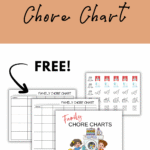
So yes, children can and should do chores. Even the three-year-old! Here’s how (and why) we make it work, and a free printable chore chart you can use in your home too.
The Benefits of Chores in a Christian Home
1. Chores Teach Responsibility
One of the most loving things we can do as parents is teach our children that responsibility is part of growing up. Life doesn’t wait for us to “feel ready,” and the earlier our kids learn to take ownership of small things, the better equipped they’ll be for big ones later on.
When a child learns to put away toys, fold laundry, or wipe down the table, they’re not just learning tasks—they’re learning that faithfulness in little things matters.
Jesus said it best in Luke 16:10:
“One who is faithful in a very little is also faithful in much…”
Chores are a simple, daily way to practice that truth.
2. They Build Life Skills That Last
As homeschool moms, we have a front-row seat to life learning, and chores are one of the best classrooms for it. From measuring cleaning solution to learning how to operate a vacuum safely, there are countless opportunities to build practical, lifelong skills. Our children learn what it means to be capable, helpful, and attentive to detail all while contributing to the family rhythm.
These small tasks slowly grow into habits of self-discipline and confidence. And honestly, that’s something every young adult will need when they step into their own homes one day.
3. Chores Encourage Development
Even the simplest tasks, like setting the table or sorting laundry, help develop a child’s memory, sequencing, and fine motor skills. Each chore comes with built-in steps: observe, think, plan, act, and complete.
And for younger children, working alongside siblings or parents also builds social and emotional development. They’re learning teamwork, communication, and perseverance, all wrapped up in everyday family life.
4. They Foster a Team Mentality
Let’s face it, friend. You can’t (and shouldn’t!) do it all. Let’s marinade on that one for a second. Or a minute!
When everyone in the home has a role, the atmosphere shifts. The load lightens. There’s less burnout, more cooperation, and a stronger sense of unity.
Even toddlers can pitch in by wiping baseboards, feeding the pet, or collecting laundry. Older kids can sweep floors, tidy shared spaces, or help with meals. Everyone contributes and everyone benefits.
When our family works together, it’s not just about a cleaner home. It’s about cultivating hearts that serve joyfully.
Children Can and Should Do Chores: A List of Chores by Age
Toddlers – Preschoolers
- Picking up toys
- Take dishes to the sink after eating.
- Picking up trash.
- Sort laundry.
- Water plants and flowers.
- Sweep the floor.
- Check the mail.
- Wipe down tables and chairs.
- Help put away groceries.
- Making their bed.
School Age
- Sort and do laundry.
- Help prepare and make a meal.
- Load and unload dishwasher.
- Vacuum and mop.
- Help with grocery shopping.
- Dusting.
- Cleaning the bathroom.
- Making the bed and keeping room tidy.
- Rake the yard (and bag leaves).
Tweens – Teens
- Meal planning.
- Cooking full meals.
- Setting and clearing the table.
- Cleaning entire rooms (bedroom, bathroom, kitchen, living room, etc.).
- Doing laundry.
- Feeding and taking care of family pets.
- Raking and mowing the lawn.
- Washing the family vehicle.
As you can see, children can and should do chores. These aren’t exhausted lists, but certainly give you a good starting point for assigning your children age-appropriate chores. Plus, you can plug them into the free printable chore chart template below.
How We Use a Chore Chart in Our Home
We’ve used chore charts for years now, and it’s been such a blessing for consistency and accountability. Here’s how we make it simple and sustainable:
1. Make a List
Start by writing down every daily or weekly task that needs attention, from dishes and laundry to windows and sweeping.
2. Assign Chores by Age and Ability
Each child has different strengths, so I assign chores accordingly. Our older kids might rotate through bathroom duty or meal cleanup, while our younger ones have smaller, manageable tasks like dusting or watering plants.
Sometimes I’ll pair a little one with an older sibling to encourage teamwork (and sneak in a little character training too).
3. Post It Where Everyone Can See
Print the chart and hang it where it’s visible—ours lives on the fridge! After a week or two, the kids know their routine and take initiative without constant reminders.
4. Build in Accountability
Each evening, I ask a simple question: “Did you do your chores today?” If something’s left undone, they finish before bedtime. Some chores, like sweeping or wiping tables, happen multiple times a day. It’s just part of our family rhythm.
5. Reward Consistency and Integrity
While chores aren’t paid jobs, we do reward consistency and good attitudes. For younger children, that might mean stickers, coloring pages, or extra playtime. Older kids appreciate a little spending money or earned screen time.
We focus on rewarding faithfulness and integrity, not perfection. The goal is to build a heart that serves, not a checklist mentality.
Why It Matters
Chores are more than a to-do list, they’re a training ground for godly character. When our children learn to serve willingly, they reflect Christ’s humility. When they see the fruit of diligence, they understand stewardship. And when we model these values alongside them, our homes become a place where faith and responsibility grow hand in hand.
Free Printable: Family Chore Chart 🧺✨
Bring peace, teamwork, and joyful responsibility into your home with this printable Family Chore Chart! Designed to help kids (and parents!) stay organized, this chart makes it easy to assign daily or weekly chores while encouraging a spirit of diligence and cooperation.
Perfect for homeschool families, large households, or anyone wanting to create a more intentional home rhythm. It’s a simple way to teach stewardship, responsibility, and the joy of serving one another, right where God has placed us.
✔ Instant download—print and start using today
✔ Great for kids of all ages
✔ Helps build consistency and independence
✔ Encourages teamwork and family discipleship
Trouble loading? Click here to download.
Final Thoughts – The Heart Behind Household Chores
I think I made a pretty good case as to why children can and should do chores. However, I want you to remember this. When you’re in the middle of chore deliberations, remember that we’re training our children to care for what God has entrusted to us, our homes, our resources, and each other. Work is not a curse; it’s a calling given before the Fall (Genesis 2:15). When our children learn to serve joyfully, they begin to reflect Christ, who came “not to be served but to serve” (Matthew 20:28).

Homegrown Motherhood is dedicated to recommending quality resources to benefit Christian families. This blog contains and is monetized through ads, sponsored posts and affiliate links. For more information, please read our Privacy Policy